
Goblet squat exercise is a highly effective full-body movement that strengthens the legs, glutes, core, and upper body while improving mobility and cardiovascular fitness. Suitable for beginners and advanced lifters alike, the goblet squat is often used as a teaching tool to develop proper squat mechanics and as a progression toward barbell front squats.
This compound movement mimics everyday actions such as standing up from a chair or lifting objects from the floor, making it functional as well as strength-building.
How to Do a Goblet Squat Exercise
To perform the goblet squat exercise correctly, you only need a kettlebell or dumbbell and enough space to move comfortably.
Step-by-step instructions:
- Stand with your feet slightly wider than hip-width apart, toes angled slightly outward.
- Hold a kettlebell or dumbbell close to your chest with both hands, elbows bent.
- Engage your core and keep your chest tall and eyes facing forward.
- Inhale as you push your hips back and bend your knees to lower into a squat.
- Keep the weight close to your torso and your heels grounded.
- Lower until your hips drop below knee level, if mobility allows.
- At the bottom position, your elbows should lightly touch the inside of your knees.
- Exhale and press through your heels to return to standing.
- Fully extend your hips and squeeze your glutes at the top.
Repeat for the desired number of repetitions while maintaining proper form.
Benefits of the Goblet Squat Exercise
The goblet squat exercise offers multiple strength, mobility, and injury-prevention benefits.
Full-Body Muscle Engagement
Goblet squats activate the quadriceps, glutes, hamstrings, calves, core muscles, spinal erectors, shoulders, forearms, and upper back, making it a total-body exercise.
Improves Squat Technique
Holding the weight in front of the body naturally encourages an upright torso, helping correct common squat errors such as leaning forward or collapsing the chest.
Supports Knee Alignment
By encouraging the elbows to track inside the knees, goblet squats promote proper knee alignment with the toes, reducing stress on the knee joints.
Reduces Injury Risk
Improved posture, controlled movement, and balanced muscle activation help protect the lower back and knees during squatting movements.
Enhances Athletic Performance
Strengthening the quads and glutes through goblet squats can improve jumping ability, sprinting power, and overall lower-body performance.
Goblet Squat Exercise Variations
The goblet squat exercise can be adjusted to match different fitness levels and goals.
Beginner Modifications
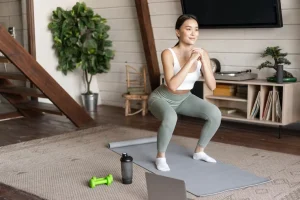
- Bodyweight Goblet Squat: Hold hands together at chest level without weight
- Box Goblet Squat: Squat down to a box or bench for controlled depth
Advanced Variations
- Heavy Goblet Squats for strength development
- High-Rep Goblet Squats for endurance and conditioning
- Tempo Goblet Squats with slow descents to increase muscle control
- Barbell Front Squat Progression as a next-level movement
Common Goblet Squat Exercise Mistakes
Holding the Weight Too Far Forward
Keeping the weight away from the chest increases shoulder strain and pulls the torso forward, compromising balance and form.
Leaning Forward at the Waist
Excessive forward lean places stress on the lower back and reduces squat effectiveness. Focus on keeping the chest tall.
Rising Onto the Toes
Weight should remain evenly distributed through the heels and mid-foot. Lifting onto the toes reduces stability and knee safety.
Knees Caving Inward
Allowing knees to collapse inward increases injury risk. Engage the glutes and keep knees aligned with toes.
Not Squatting Deep Enough
Skipping the bottom portion of the movement limits strength gains and mobility improvements.
Safety and Precautions
The goblet squat exercise is generally safe for most people, but caution is advised if you experience knee or lower-back pain. Start with lighter weights, reduce depth if necessary, and progress gradually. Discontinue the exercise if sharp or persistent pain occurs.
Consult a healthcare or fitness professional if you are recovering from injury or surgery.
FAQs: Goblet Squat Exercise
What muscles does the goblet squat exercise work?
The goblet squat exercise targets the glutes, quadriceps, hamstrings, calves, core, shoulders, and upper back.
Is the goblet squat good for beginners?
Yes. Goblet squats are one of the best squat variations for beginners because they reinforce proper posture and movement patterns.
How heavy should I go on goblet squats?
Beginners should start with a light weight and increase gradually as form improves. Strength training typically uses heavier weights with fewer reps.
Can goblet squats replace barbell squats?
Goblet squats are an excellent alternative but may be limited by grip strength at higher weights. They are often used as a progression toward barbell squats.
How many goblet squats should I do?
For strength, aim for 3–5 sets of 4–8 reps. For endurance or conditioning, perform 3–6 sets of 8–15 reps.