(focus keyword appears at the beginning)
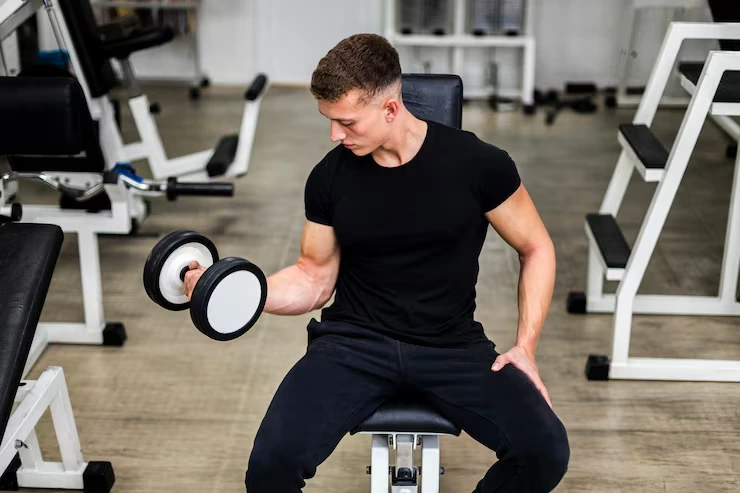
The incline dumbbell press exercise is a popular chest movement that targets the upper chest, shoulders, and triceps. It is performed on an incline bench and helps build balanced upper-body strength. This exercise allows each arm to work independently, improving stability and fixing imbalances.
What Is the Incline Dumbbell Press?
The incline dumbbell press shifts the focus toward the upper part of the chest and the front of the shoulders. It is commonly used by lifters who want to add more shape and strength to the upper chest. Because each arm controls its own dumbbell, this exercise also improves coordination and prevents one side from overpowering the other.
How to Do the Incline Dumbbell Press
Follow these steps for safe and effective form:
- Set your bench to an incline of 30 to 45 degrees.
- Sit down, lean back, and hold one dumbbell in each hand.
- Keep the weights at shoulder level with elbows angled slightly down.
- Brace your core and press the dumbbells upward while breathing out.
- Bring the dumbbells close together at the top without touching.
- Lower the weights slowly as you breathe in, keeping elbows at about a 45-degree angle.
- Complete 8–12 reps per set, starting with one set and increasing as your strength improves.
- After finishing your set, sit up and place dumbbells on your knees before standing. Avoid dropping the weights backward.
Choosing the Right Bench Angle
A 30-degree angle is ideal for most people, as it targets the upper chest without placing too much strain on the shoulders. A higher angle (closer to 45 degrees) shifts more work to the shoulders. You can change angles every few weeks to challenge your muscles in a different way.
Benefits of the Incline Dumbbell Press
- Stronger upper chest
- Better shoulder stability
- Improved pushing strength for daily tasks
- Correction of strength imbalances between sides
- More control due to independent arm movement
- A fuller, more balanced chest appearance
This exercise also supports movements like pushing open heavy doors or placing objects on higher shelves.
Variations of the Incline Dumbbell Press
1. Barbell Incline Press
If you want more stability, use a barbell instead of dumbbells. You perform the movement the same way, but lifting with both hands together reduces the need for side-to-side control.
2. Kettlebell Incline Press
Using kettlebells adds difficulty because the weight hangs differently. This variation challenges your stabilizing muscles even more.
3. Single-Arm Incline Press
Holding a weight with only one hand increases core engagement. Your body must prevent twisting while pressing the weight, making this variation great for stability and control.
Common Mistakes to Avoid
Using Too Much Weight
The incline press uses smaller muscles, so your weight needs to be lighter than what you use on a flat bench. When the weight is too heavy, form breaks down and the risk of injury rises.
Bending Your Wrists Back
Keep your wrists straight to prevent strain. Letting them bend backward increases pressure on your wrist joints.
Setting the Bench at the Wrong Angle
A very low angle acts like a flat bench, while a very high angle turns the movement into a shoulder press. Stay between 30 and 45 degrees.
Bouncing the Dumbbells Off Your Chest
This happens when the weight is too heavy. Always lower the dumbbells with control.
Over-arching the Back
A natural curve in the lower back is normal, but pushing your back off the bench can strain it. If you cannot maintain position, lower the weight.
Safety Tips
- Choose a weight that lets you complete 8–12 reps with control.
- If you are new to training, start with machine or barbell variations first.
- Stop the exercise if you feel sharp pain in the shoulders.
- A spotter can help if you are lifting heavier weight.
FAQs
1. Is incline dumbbell press harder than flat bench press?
Yes, because it uses smaller muscle groups and requires more control.
2. Should I do incline or flat bench first?
If your goal is upper-chest strength, start with incline. If you want overall chest strength, start with flat bench.
3. Is incline dumbbell press better than barbell?
It depends on your goal. Dumbbells improve balance and stability, while barbells allow heavier lifting.