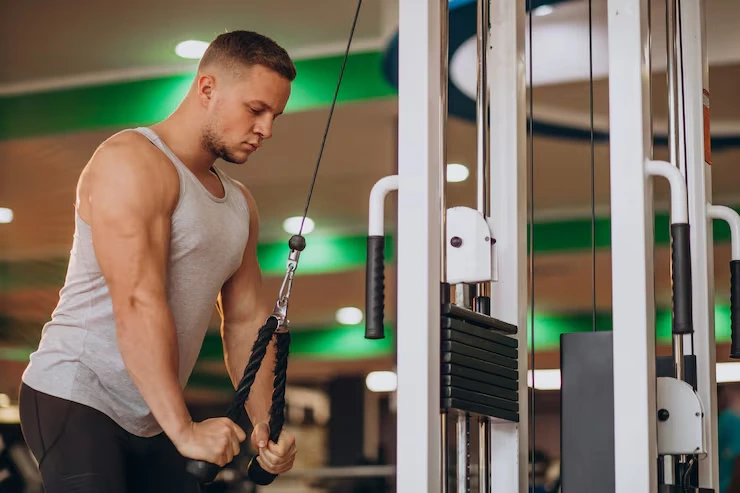
The chest fly machine is one of the most effective tools for isolating and strengthening the chest muscles. Often referred to as the pec fly or butterfly machine, it allows you to focus directly on the pectoral muscles without the need for balance or heavy stabilization.
This makes it an excellent choice for beginners as well as experienced lifters who want controlled, targeted muscle activation.
How to Use the Chest Fly Machine Properly
Start by adjusting the seat height so that the handles align with your chest. Your feet should remain flat on the floor while your back stays firmly supported against the pad.
Grip the handles with your palms facing forward and keep a slight bend in your elbows. This position helps protect your joints and ensures proper muscle engagement.
Bring the handles together slowly in front of your chest, focusing on squeezing your chest muscles. Pause briefly at the peak of the movement, then return to the starting position in a controlled manner.
Maintain steady breathing by exhaling as you bring the handles together and inhaling as you open your arms back up.
Benefits of the Chest Fly Machine
The chest fly machine effectively targets the pectoralis major, the primary muscle responsible for pushing movements. Regular use can improve upper body strength and contribute to better muscle definition.
Because the movement is guided, it reduces the risk of improper form and allows you to focus entirely on muscle contraction. This makes it particularly useful for beginners or individuals recovering from lower-body injuries who need a seated exercise option.
In addition to building muscle, this exercise can support better posture and enhance overall upper body performance.
Variations of the Chest Fly Machine
Some machines are designed with elbow pads instead of handles, allowing for a different arm position that may be more comfortable for individuals with wrist or hand limitations.
Another effective variation is performing the movement one arm at a time. This increases core engagement as your body works to stay stable during the exercise.
You can also incorporate similar movements using cables or dumbbells to add variety and challenge different stabilizing muscles.
Common Mistakes to Avoid
Using excessive weight is a frequent mistake that leads to poor form and reduced effectiveness. It is better to use a moderate weight and maintain control throughout the movement.
Relying on momentum instead of controlled motion reduces muscle activation. Slow and steady repetitions produce better results.
Arching the lower back during the exercise can cause unnecessary strain. Keeping your back flat against the pad helps maintain proper alignment.
Engaging the legs to push or stabilize the movement takes focus away from the chest muscles. The exercise should isolate the upper body.
Holding your breath can limit performance and increase tension. Consistent breathing improves control and endurance.
Safety and Precautions
Always begin with a lighter weight to learn the correct movement pattern. Gradually increase resistance as your strength improves.
Make sure the machine is properly adjusted to your body size before starting. Incorrect setup can lead to poor form and discomfort.
If you experience pain in your shoulders or chest, stop the exercise and reassess your technique. Consulting a trainer can help correct form and prevent injury.
Final Thoughts
The chest fly machine is a reliable and effective exercise for building chest strength and improving muscle definition. By focusing on proper form, controlled movement, and gradual progression, you can maximize results while minimizing the risk of injury.
Incorporating this exercise into your routine can help create a stronger, more balanced upper body.